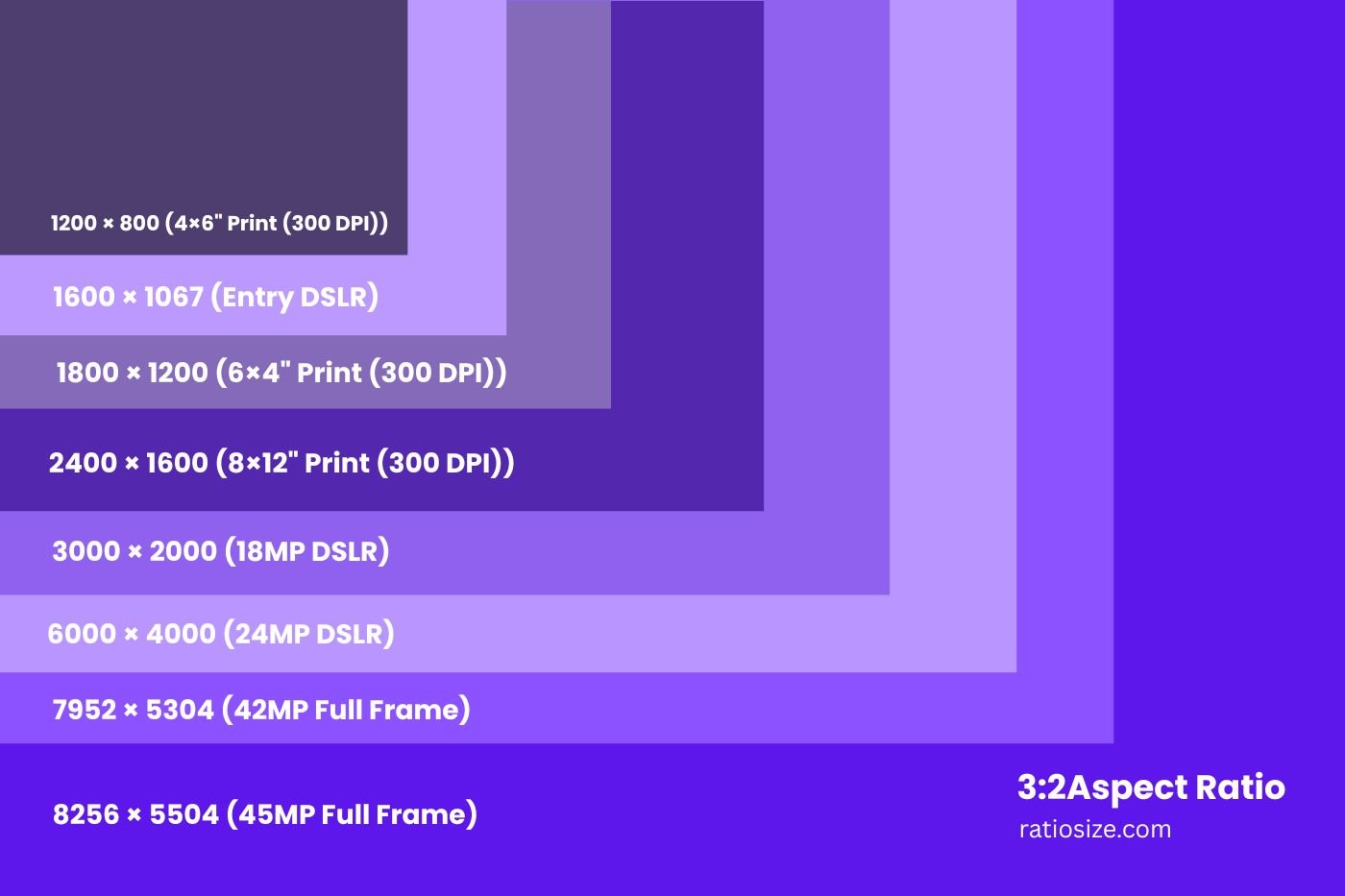
Understanding the 3:2 Aspect Ratio
The 3:2 aspect ratio represents one of the most enduring standards in visual media. This proportion, where the width is 1.5 times the height, was established with the introduction of 35mm film in the early 20th century and has remained the benchmark for photographic composition ever since. The 3:2 ratio creates a rectangular frame that balances horizontal and vertical space, offering photographers a canvas that feels natural to the human eye.
What makes the 3:2 ratio particularly significant is its continued relevance across the transition from film to digital photography. Most professional DSLR and mirrorless cameras maintain this classic proportion for their sensors, preserving the compositional traditions developed over decades of photographic history. The ratio provides enough horizontal space for landscapes while still offering adequate vertical room for portraits, making it remarkably versatile across different photographic genres.
Common 3:2 Resolutions and Their Applications
| Resolution Name | Dimensions (pixels) | Total Pixels | Common Uses |
|---|---|---|---|
| 4×6" Print (300 DPI) | 1200 × 800 | 960,000 | Standard photo prints, postcards |
| Entry DSLR | 1600 × 1067 | 1,707,200 | Basic digital photography, web use |
| 6×4" Print (300 DPI) | 1800 × 1200 | 2,160,000 | High-quality standard prints |
| 8×12" Print (300 DPI) | 2400 × 1600 | 3,840,000 | Medium photo prints, small posters |
| 18MP DSLR | 3000 × 2000 | 6,000,000 | Mid-range digital cameras |
| 24MP DSLR | 6000 × 4000 | 24,000,000 | Professional photography |
| 42MP Full Frame | 7952 × 5304 | 42,177,408 | High-end professional cameras |
| 45MP Full Frame | 8256 × 5504 | 45,441,024 | Premium professional cameras |
| 20×30" Print (300 DPI) | 9000 × 6000 | 54,000,000 | Large format printing, exhibitions |
Historical Significance of 3:2
The 3:2 aspect ratio's prominence is deeply rooted in photographic history:
- 35mm film standard: When Oskar Barnack designed the original Leica camera in 1913, he established the 24×36mm frame size on 35mm film, creating the 3:2 ratio that would become the standard for decades to come.
- Proliferation through film: As 35mm film became the dominant format for both professional and consumer photography throughout the 20th century, the 3:2 ratio became the default compositional framework for generations of photographers.
- Digital continuation: When digital SLR cameras emerged in the late 1990s and early 2000s, manufacturers maintained the 3:2 ratio to preserve compatibility with existing lenses and compositional techniques.
- Print standardization: The 3:2 ratio aligns perfectly with standard photo print sizes like 4×6 inches, creating a direct path from capture to physical output.
The endurance of the 3:2 ratio through more than a century of technological change speaks to its fundamental suitability for photographic expression. It has shaped how photographers see and compose images, influencing aesthetic sensibilities across multiple generations.
3:2 in Photography
The 3:2 ratio offers specific compositional advantages for photographers:
- Versatile composition: The 3:2 frame provides enough horizontal space for landscapes while maintaining adequate vertical room for portraits, making it highly adaptable across genres.
- Rule of thirds application: The 3:2 ratio works particularly well with the rule of thirds, creating balanced intersection points that naturally guide composition.
- Negative space management: The moderate width of the 3:2 frame allows photographers to effectively use negative space without the extreme stretching found in wider formats.
- Print compatibility: Images shot in 3:2 translate directly to standard print sizes without awkward cropping or resizing.
Photographer's tip: When composing in 3:2, pay special attention to the horizontal edges of your frame. Unlike squarer formats, the 3:2 ratio emphasizes horizontal movement and flow, making edge control particularly important to your composition.
3:2 in Print and Display
The 3:2 ratio maintains strong relevance in physical photo reproduction:
- Standard print sizes: The 4×6 inch print (and its larger equivalents like 8×12 and 16×24) directly matches the 3:2 ratio, eliminating the need for cropping.
- Photo books: Many photo book formats are designed around the 3:2 ratio to accommodate uncropped photographic images.
- Exhibition printing: Gallery and exhibition prints often maintain the 3:2 ratio to preserve the photographer's original composition.
- Digital displays: While most monitors and screens use wider ratios like 16:9, the 3:2 ratio appears as a moderately letterboxed image, preserving the full composition.
Print consideration: When printing 3:2 images, consider that some standard frame sizes (like 8×10 inches) do not match the 3:2 ratio. For these non-matching formats, you'll need to decide which parts of the image to crop.
Converting Between 3:2 and Other Aspect Ratios
Adapting content between 3:2 and other common ratios requires careful consideration:
Converting from 3:2 to 4:3
- Width crop method: Remove portions from the left and right sides of the 3:2 image to fit the narrower 4:3 frame.
- Mathematical conversion: For a 3:2 image with width W, the 4:3 width would be W × (3÷4) × (3÷2), or approximately 0.94W.
Converting from 3:2 to 16:9
- Height crop method: Remove portions from the top and bottom of the 3:2 image to fit the wider 16:9 frame.
- Mathematical conversion: For a 3:2 image with height H, the 16:9 height would be H × (9÷16) × (3÷2), or approximately 0.84H.
Converting from 3:2 to 1:1
- Center crop method: Remove equal portions from both sides of the 3:2 image to create a centered square.
- Subject-based crop: Position the square crop to best frame the subject, which may not be centered in the original image.
Composition tip: When shooting with potential cropping in mind, leave some compositional flexibility around the edges of your frame. Consider using the "rule of thirds" rather than placing key elements at the extreme edges.
Technical Considerations for 3:2 Content
Camera Settings
Working with the 3:2 ratio in-camera:
- Native capture: Most DSLRs and mirrorless cameras capture in 3:2 by default. This is the sensor's native ratio and provides the highest resolution.
- Viewfinder framing: Camera viewfinders and LCD screens typically show the full 3:2 frame, sometimes with optional overlay guides for other ratios.
- In-camera cropping: Many cameras allow you to set alternative aspect ratios like 1:1 or 16:9, but this simply crops the 3:2 sensor data rather than changing how the sensor captures.
Resolution and File Size Considerations
How the 3:2 ratio affects image data:
- Comparative pixel count: A 3:2 image captures more vertical information than a 16:9 image of the same width, resulting in more total pixels.
- Megapixel terminology: When camera manufacturers list megapixel counts, they're referring to the total pixels in the native 3:2 capture.
- Cropping impact: Cropping a 3:2 image to other aspect ratios reduces the total resolution. For example, cropping to 1:1 can reduce pixel count by up to 33%.
Future of the 3:2 Aspect Ratio
The 3:2 ratio's position in contemporary visual media:
- Continued camera relevance: Most professional and enthusiast-level cameras maintain the 3:2 sensor format, ensuring its ongoing importance in photography.
- Print persistence: Standard photo print sizes continue to reflect the 3:2 ratio, reinforcing its relevance in physical media.
- Digital adaptation: While digital displays favor wider formats like 16:9, photographic websites and portfolio platforms typically accommodate 3:2 images without awkward cropping.
- Medium format alternative: Some high-end camera systems use the slightly squarer 4:3 ratio common in medium format film, presenting the main alternative to 3:2 in professional photography.
The 3:2 ratio likely represents one of the most stable aspect ratios in visual media, with over a century of use behind it and continued relevance in professional imaging. While other formats rise and fall with technological trends, the fundamental balance of the 3:2 frame ensures its lasting place in photographic expression.
Practical Applications and Tips
For Photographers
- Master the horizontal dynamics of the 3:2 frame—the ratio encourages left-to-right visual flow
- When shooting portraits in 3:2, consider whether vertical (portrait) or horizontal (landscape) orientation better suits your subject
- Use the generous horizontal space in 3:2 to create environmental context around your main subject
For Print and Display
- Choose 4×6, 8×12, or 12×18 inch prints for uncropped 3:2 images
- When matting 3:2 photos, consider custom mat cutting for non-standard frame sizes to avoid further cropping
- For digital display, consider using subtle borders rather than letting the display add plain black letterboxing
For Digital Content
- When preparing 3:2 images for websites, consider how they'll display on widescreen monitors—will they need additional design elements?
- For social media sharing, be aware that platforms may crop 3:2 images differently—check previews before posting
- Consider creating templates for common output formats that show safe areas within your 3:2 frame
The 3:2 aspect ratio represents a perfect balance between aesthetic tradition and practical utility in photography. Its origins in 35mm film created a standard that has proven remarkably adaptable across technological transitions, from chemical emulsions to digital sensors. By understanding the compositional properties and practical applications of this classic photographic format, you can better harness its potential in your own imagery, whether you're shooting for print, digital display, or archival purposes.